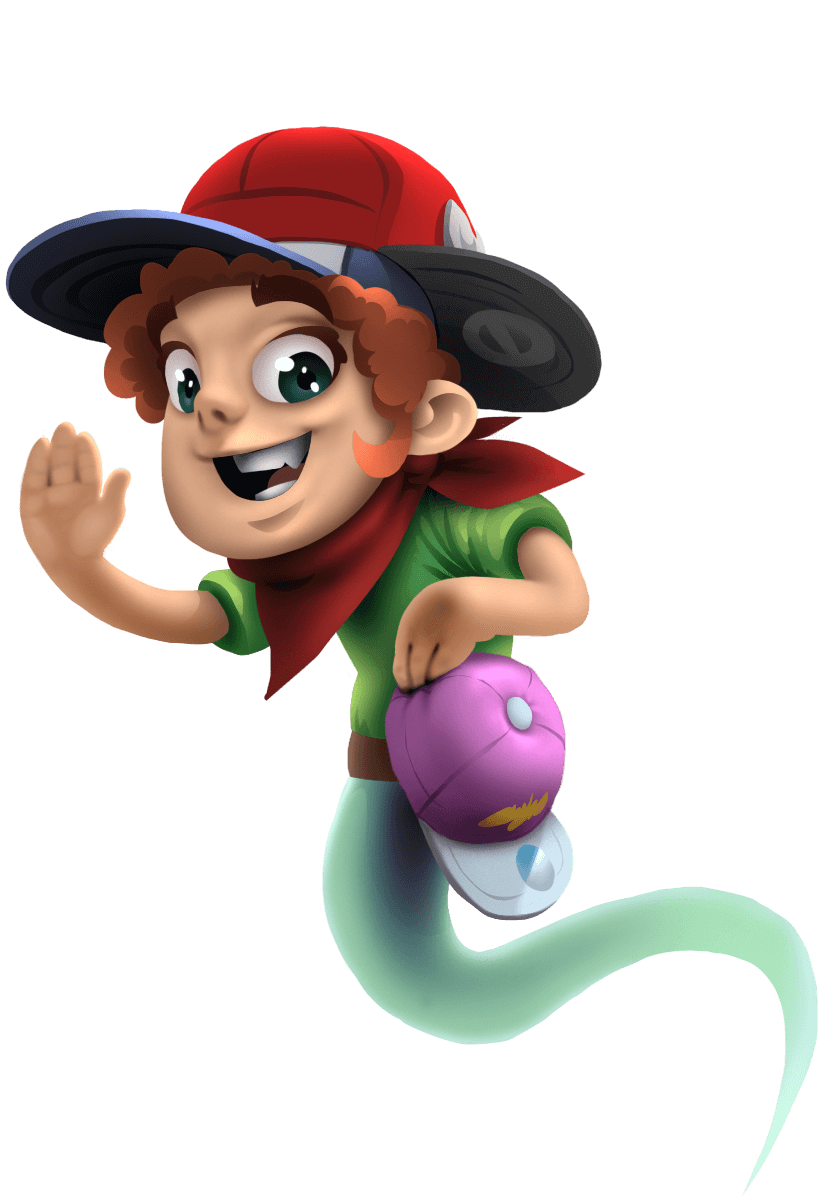



“What a beautiful day!” Kaško exclaimed as soon as he landed on Maxík and Majka’s window, but it seemed that Majka and Maxík didn’t think so.
“Hey, I’m saying it’s a beautiful day,” Kaško repeated, smiling so broadly that the entire Mona Lisa—along with the little ermine from another painting—could have fit into his grin.
“All right, all right, we heard you,” Maxík answered curtly, fixing his gaze back on the wall.
“What’s wrong with you guys?” Kaško muttered, a little annoyed.
“Nothing,” both friends snapped.
“I see,” Kaško sat down in the armchair, “so this is what human kids look like when nothing’s going on, hmm,” he looked at his friends and waited for an answer.
Majka and Maxík glanced at Kaško in the chair for a moment, but immediately turned their gaze back to the wall and the floor.
“So, will someone just tell me what happened?” Kaško couldn’t take it anymore and raised his voice.
“What happened is that Maxík has a memory like a shapeshifter,” Majka finally began to explain.
“Like what?” Kaško didn’t understand; he’d been around for several centuries, but he didn’t know any kind of ‘shifter’.
“Like an amoeba,” Majka repeated.
“You mean like that single-celled organism with no memory?” Kaško found an ‘amoeba’ in his memory.
“Exactly that one,” confirmed Maxík.
“Oh, oh, and what did you forget?” Kaško understood and settled comfortably into his chair.
“That we’re supposed to have a race this weekend,” Majka added, a little angry and a little sad.
“But it’s this weekend, so you’ll still have time to get ready and practice, right?” Kaško didn’t understand.
“But we were supposed to come up with the race!” Maxík finally blurted out.
“Come up with what?” Kaško stopped smiling, sensing a problem.
“Well, every month, a friend in our group comes up with a race for all the other friends—in anything—like soap-making or jumping through puddles,” Maxík began to explain.
“But we’ll come up with something in a flash,” Kaško cheered up when he realised that this was the only thing bothering his friends. He was so happy he nearly hit the ceiling.
“But we don’t want to just come up with anything,” said Maxík, rubbing his hands nervously.
“Because Maxík promised our friends that together—meaning with me too—we’d come up with an awesome race,” Majka raised her voice and gave Maxík a dangerous look, “and he even added that we’d have medals and prizes like no one’s ever had before, that they’d be reaallllllly cool!”
“Oh, well, that’s a bit of a problem, but we’ll manage,” Kaško mused, rubbing his bumped head, which he’d hit on the ceiling. “Because you probably don’t know this, but ghosts can only fly through walls when they want to, and when they’re really happy or angry, they crash into them just like we do.”
“I wonder what we’ll come up with in about two days,” Majka said, getting up and heading off to draw instead.
“Does it have to be here in Košice?” Kaško asked, already having something in mind—some kind of plan; you could tell just by looking at him.
“It has to be in Haravara,” Maxík perked up, because he recognised that look on Kaško’s face.
“So, let’s go,” Kaško blurted out.
“But where?” Majka and Maxík asked at the same time.
“To Brehov,” Kaško announced casually.
“Ha, ha, ha,” Majka sat back down to draw.
“Really funny,” Maxík added, staring at the wall again.
“But it really is such a little village,” Kaško said, already waiting by the window for his friends.
“You didn’t mean that as a joke?” Majka looked up from her drawing, and Kaško just shook his head.
“So, you weren’t kidding?” Maxík asked for confirmation.
“Brehov is such a great village you’ll fall over,” Kaško smiled, and it was clear they were in for some fun and their friends were saved.
“So, what are we waiting for?!” Maxík jumped up.
“I’m waiting for you!” Kaško shouted and quickly flew down. The kids ran down the stairs and rushed to the station, where they boarded a train and then a bus that took them to Kráľovský Chlmec. There, they remembered how Maxík had been knighted here, and they drove to Brehov.
“And what is this?” All three stood with their mouths agape in front of something fantastic.
“Well, this is it, friends,” Kaško boasted, “a willow maze.”
“Wow,” was all Maxík could manage.
“That’s awesome,” Majka gushed.
“We could come up with some races here, like, like… like,”… Maxík had already started imagining various events in his head.
“I’ll help you,” a voice called out behind Kaško, Maxík, and Majka.
All three turned around, and standing behind them was a fellow—well, if we had to name him, he’d probably be called a little willow man in brown, with tousled hair. He looked a bit like a water sprite, but not the evil kind—the good one from fairy tales. And most importantly, he had very kind eyes, and whoever has kind eyes also has a kind heart.
“I’m Willko,” he said in a pleasant voice.
“And what are you doing here, Willko?” Majka befriended him right away.
“I’m a guide here,” he pointed to the willow maze.
“That’s great,” Maxík joined in the fun, “and will you be guiding us?”
“That’s what I’m here for!” said Willko with his beautiful smile, and off they went to the maze. Willko pointed everything out to them, explained how the willows grow and how not to get lost, and many other things. Meanwhile, Kaško flitted around them and sometimes even teased Willko a little by blowing on his hair, making it stand on end and fall flat like spaghetti in a good Haravarian restaurant. At the end, he took them to a spot near the maze.
“And what’s that?” Majka asked, looking at the other willow twigs.
“Those are, if you please, animal sculptures made of twigs,” Willko pointed at them and was already running over, with Maxík and Majka following close behind.
“Those are aaaawesome,” Maxík gushed.
“Aren’t they?” Willko praised himself, and Kaško gave them an appreciative look as well.
Willko looked toward the maze and saw more children there.
“Sorry, guys, but there are other kids waiting for me who want to go into the maze.”
The friends shook hands and agreed that they would definitely come back here for a longer visit with their parents.
“You should start your race here,” Kaško whispered in Maxík’s ear.
“But I don’t get why we should start our races here?” Maxík asked Kaško.
“Well, my dear friend, because every friend would choose here…”
“Their own little animal,” Majka interrupted Kaško.
“Exactly,” Kaško patted her on the head.
“That’s a great idea,” Maxík agreed, “and then we could play hide-and-seek, or chase each other, or find each other by sound or by tracks.” Maxík was spouting ideas and Majka was just writing them down until they had about 68 of them.
“And maybe we should move to that maze afterward,” Maxík was still looking for something special.
“And in it, everyone would be tasked with finding their own path,” Majka helped him out.
“Yessss!” Maxík shouted and went on “and the friends could get a thread like Ariadne had, and if they got lost, they’d have to wind it back, so they wouldn’t get lost…”
“And maybe they’d find other unknown paths too.”
“I don’t want to butt in,” Kaško chimed in, “but they could have a piece of paper where they’d mark their escape routes, and that would create a secret map of the maze. The mischief in the maze was a success,” he finished, waiting for a reaction, but there was silence.
“Did something happen?” Kaško asked, confused, looking to see if the statues had dried up or burned or something like that.
“The rewards,” Maxík said dryly, and Majka’s eyes filled with little tears.
“We promised our friends real medals,” Majka sobbed.
“And is that a problem?” Kaško asked, a bit stupidly.
“It’s a problem because, as you probably don’t know, medals in our human world are made of gold, silver, and bronze, for example.”
“Oh, and what if everyone just got a potato medal?” Kaško mused.
“We have no choice but to come up with awesome contests and games,” Maxík sighed, “and admit that we don’t have prizes or medals.”
“No way!” Kaško exclaimed.
“What do you mean, no way?” Majka looked at him, a little annoyed, because she thought Kaško was going to suggest potato medals again.
“If it’s supposed to be gold, then it’ll be gold—we’re off to Veľké Trakany,” Kaško announced calmly, as if it were no big deal.
“Where?!” both siblings cried out.
“To Veľ-ké Tra-kany,” Kaško repeated slowly.
“And what on earth is that?” Maxík asked, confused.
“It’s probably a place where you can only go in suspenders,” Majka laughed for a moment.
“Or when they hang you by your suspenders, and if you hang there for three days, they’ll give you a little silver, and if five days, then a little gold too,” Maxík continued to fantasise.
“Veľké Trakany is a place full of gold, where there’s a little gold even now, where there are maps showing where the gold was, and of course…”
“And of course we’re going there right away,” Majka decided for everyone.
“But there’s fairy-tale gold there,” Kaško clarified.
“Well, that’s great that there’s fairy-tale wealth there,” Majka didn’t understand Kaško’s remark.
“I said there’s fairy-tale gold there, but you’ll see for yourselves when we get there.”
Kaško pulled a small bag containing an invisibility-inducing flying herb from his cloak—it’s a plant that makes you fly and also renders you invisible. As soon as they took it, all three of them were already floating and flying for just a short while, because Veľké Trakany is only about 40 kilometres from Brehov.
“And here we are,” Kaško announced triumphantly after landing.
Majka and Maxík were sitting on the ground, because that’s how they landed after the flight, and they didn’t even want to get up when they saw what they saw.
“Cool, huh?” Kaško asked his friends.
“Mhm, I mean, the house is pretty,” Maxík began.
“But are you really trying to tell us,” Majka continued, “that the house is full of gold?”
“But I didn’t say there’d be a house full of gold here,” Kaško defended himself.
“Well,” Maxík stood up and looked around at the truly beautiful house, which had surely stood there for about 300 years. “Is there at least a nugget of gold or silver, or bronze for our medals, in this house?”
“You could find a few nuggets here,” Kaško smiled under his mustache.
“You mean lumps of cheese?” Majka had also gotten up from the ground.
“Gold,” Kaško nodded toward the children, motioning for them to head toward the building.
“And what kind of building is that?” Maxík finally asked as they approached it.
“Well, this river here is the Tisa,” Kaško began his story at length.
“Sure,” said Majka, looking around at the building, which was truly majestic, and imagining which window might hold the gold.
“Over there, on the other side of the river, is Hungary,” Kaško pointed with his finger, “and over there, beyond the hills—or rather, the little hills—is Ukraine.”
“Oooooo, so there are actually three borders close by here,” Maxík began looking around enthusiastically.
“Just like in Kráľovský Chlmec,” Kaško confirmed.
“And where’s the gold?” Majka couldn’t hold back any longer. “In which window?”
“Over there by the Tisa,” Kaško continued.
“Down that river,” added Maxík, who was also searching with his eyes for the promised gold.
“Ships used to sail here,” Kaško closed his eyes and imagined something, “and those ships stopped here, and they started unloading and loading…”
“Gold!” Maxík woke him from his daydream.
“Exactly,” confirmed Kaško, and they were already standing in front of a magnificent gate. They went inside and found a sort of museum full of maps, magnificent instruments, and all sorts of things—everything but gold.
“Kaško?!” Maxík began.
“Yes, Maxík?” Kaško replied, flitting among the old maps, historical instruments, chairs, and tables…
“On which of these beautiful maps hanging here is our gold?”
“Probably on every one,” Kaško replied calmly.
“What do you mean, on every single one?” Majka pulled out a magnifying glass and started searching for gold on the maps.
“Well, because these are maps of places where gold was mined,” Kaško explained.
“Really?” the friends asked again, and now both were examining the maps like scientists at the Academy of Sciences or some research institute, or a chemistry lab.
“But white,” Kaško finally added.
“What kind of white?” Majka perked up and stopped searching for gold on the map with her magnifying glass.
“White gold from a fairy tale,” Kaško winked at her.
“I’m trying to remember a fairy tale about white gold,” Maxík mused, “but I can’t find one.”
“I can,” Majka smiled at Kaško. “You’ve got us, but it’s a great idea.”
“Thanks,” Kaško sighed with relief.
“Will someone explain this to me?” Maxík still didn’t get it.
“These here, little brother,” Majka pointed to the maps, “are maps of places where fairy-tale gold was mined.”
“Diamonds?” Maxík wondered. “But we can’t give our friends a diamond medal, can we?”
“What’s more valuable than gold in fairy tales?” Majka helped her brother.
“Salt?” Maxík whispered quietly.
“Exactly,” Kaško laughed.
“So, this is…”
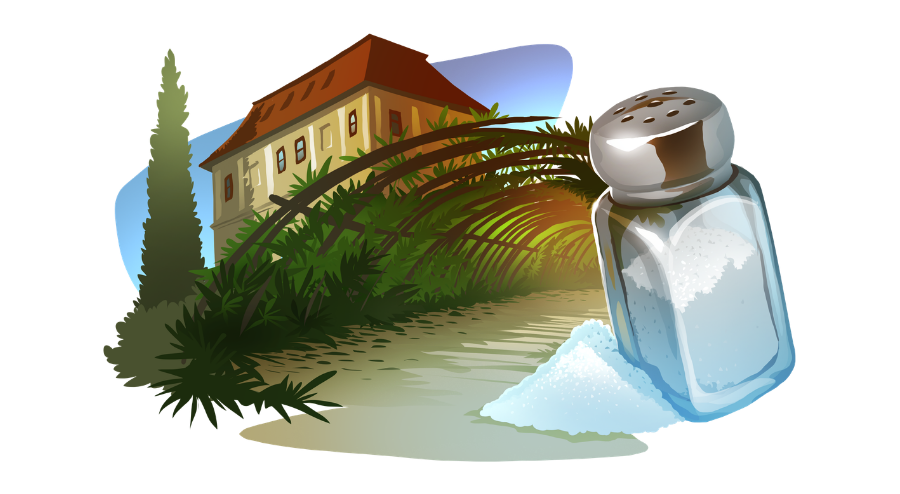
“This is an old salt warehouse. Salt was stored here; ships came here to pick it up, and it was shipped from here all over historic Hungary—and beyond,” Kaško pointed to the magnificent model of the old salt warehouse in front of them. It was a model of that magnificent building they were now standing in.
“So, we’re going to make medals out of salt?” Maxík confirmed his expectations.
“Exactly, and it’ll be great because we’ll actually be giving them a medal that’s worth more than gold, and we’ll have fun doing it too,” Majka said excitedly.
“So, we’ve got it all figured out?” Maxík paused for a moment.
“It seems so,” Majka said, glancing at all her notes.
“And where’s Kaško?” Majka asked Maxík, and sure enough, they looked around—Kaško was nowhere to be seen.
“Kaškoooo!!” they both shouted.
“I’m here,” Kaško, almost out of breath, was wheezing.
“Where were you?”
“I was looking for my cousin Persifal.”
“Nice name,” Majka acknowledged.
“Yeah, Persifal has lived here for many years.”
“And he knows how to get to the gold—I mean, the salt,” Maxík corrected himself.
“He does, but he’s not here,” Kaško mused. “I have to call him!” and off he went to call in that familiar ghostly way. Then he breathed on a beautiful glass pane in the exhibition of pastoral art, which is also in this salt house, and on the pane, he found a message just as they used to leave them when they were still just little ghosts.
“I’m at the Golden Sands,” it read on the small pane of glass.
“Great, let’s go find him,” Kaško left flying.
“But Kaško, we can’t go all the way to the land of Helter-Skelter.”
“But why would we go there?” Kaško didn’t understand.
“Well, because that’s where the Golden Sands are,” Majka explained to the little soul.
“But they’re here in Malé Trakany - Little Trakany - too,” Kaško smiled.
“Really?!” Majka couldn’t believe it.
“Come on, it’s not far,” Kaško urged his friends toward another adventure.
And sure enough, in just a moment they reached the Tisa River and the sandy beaches with their beautiful natural surroundings. Kaško suddenly dashed toward a boy lying there, resting, slapped him on the shoulder, and the boy nearly had a heart attack—but he couldn’t, because it was the ghost of Persifal.
“This is my cousin Persifal,” Kaško introduced his cousin.
“So, you’re the kids who can see ghosts and even play with them?” Persifal looked at Majka and Maxík.
“That’s us. I’m Maxík and this is my sister Majka,” Maxík began.
“And would you like a lump of salt?” Persi smiled mischievously at them.
“Well, maybe three,” Majka whispered timidly.
“So that we can have more medals for our friends,” Maxík added.
“Then just lie down here,” Persifal reassured them with his gaze and voice, “and Kaško and I will be back in a moment.”
“I have to go too,” Kaško said sadly, because he wanted to play in the sand with his friends.
“Of course you have to. I haven’t seen you in about 150 years, so you’ll tell me what’s new.” And they flew off.
The kids first played on the beach, then swam a bit and looked around at the nature, which is absolutely gorgeous here, and on the beach by the Tisa River, they really felt like they were on a beach somewhere by the Baltic Sea. They waved to the children on the other bank, where Hungary is, and when they went to sunbathe, they fell asleep. In the morning, they woke up in their own beds and found twelve lumps of salt and their plan for games in the willow maze.